
Open Hands Mediation offers both Restorative and Facilitative Mediation
Mediation FAQ’s
What a facilitative mediator is
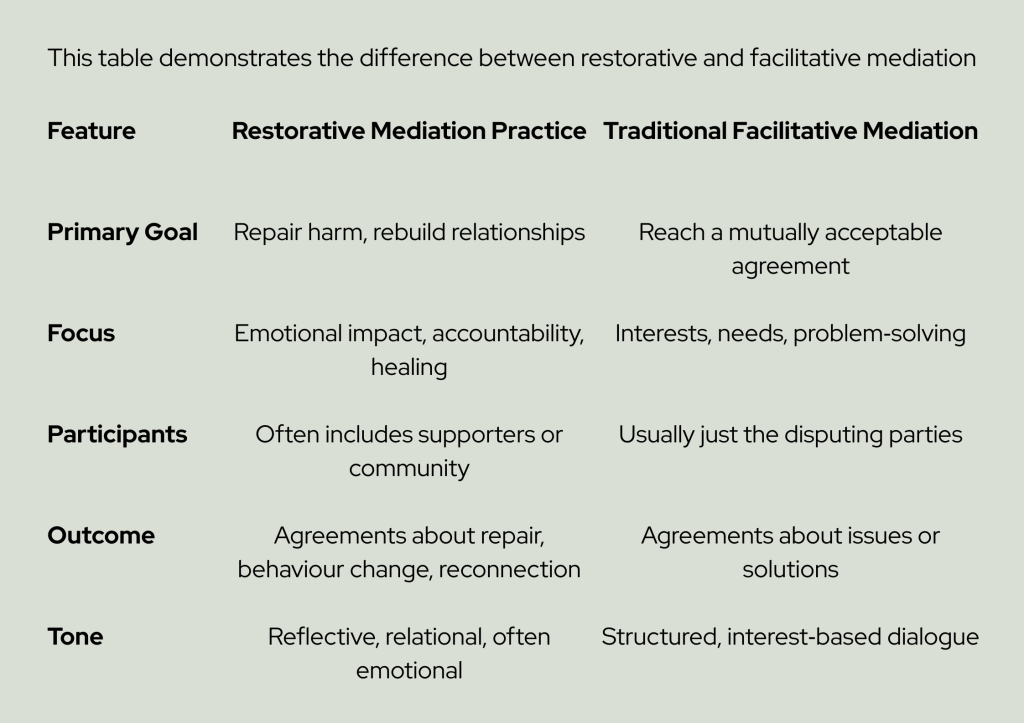
A facilitative mediator is a neutral third person who helps people in conflict talk to each other, understand each other’s perspectives, and work toward their own mutually acceptable agreement. They guide the process, not the outcome. They don’t give advice, take sides, or decide who is right.
This style of mediation is one of the most widely used approaches and is considered the “classic” or traditional form of mediation.
Key features of facilitative mediation
– The mediator guides the conversation
They structure the discussion so each person can speak, be heard, and respond constructively.
Sources:
– The parties—not the mediator—generate solutions
The mediator does not suggest outcomes, evaluate the case, or offer legal opinions.
Sources:
– Focus on interests, needs, and understanding
The mediator helps people explore what’s important to them—not just their positions—to find common ground.
Sources:
– Neutral and non-judgmental
They don’t take sides, make decisions, or pressure anyone into an agreement.
Sources:
– Encourages direct communication
Facilitative mediators often use joint sessions so parties can speak directly to each other in a safe, structured environment.
Sources:
Why people choose facilitative mediation
It supports self-determination — people stay in control of decisions.
It’s often less adversarial and more respectful.
It can preserve or improve ongoing relationships (family, workplace, business).
It’s flexible and adaptable to many types of disputes.
What Restorative Practice Mediation Is (In Plain English)
Restorative practice mediation is a form of conflict resolution that focuses on repairing harm, restoring relationships, and promoting accountability, rather than simply settling a dispute. It blends principles of restorative justice with the structure of traditional mediation.
Instead of asking “Who’s right?” it asks:
“What harm was caused, who was affected, and what needs to happen to make things right?”
Core Principles of Restorative Practice Mediation
– Repairing Harm
The central goal is to understand the impact of the conflict and work toward healing — emotionally, relationally, and sometimes practically.
– Inclusive Dialogue
Everyone affected by the conflict has a voice. This may include:
The person who caused harm
The person harmed
Supporters or community members
Sometimes organisational representatives
This inclusive approach is a hallmark of restorative justice processes.
– Accountability and Understanding
Participants can ask questions, express emotions, and explain the impact of the incident. The person who caused harm has the opportunity to show accountability, remorse, or understanding of the consequences.
– Voluntary and Safe
Participation is always voluntary, and mediators conduct private intake sessions beforehand to ensure the process is safe and appropriate for everyone involved.
– Mediator as a Facilitator of Healing
The mediator is neutral and accredited, but their role is more relational than in standard mediation. They create a safe space, guide the conversation, and help participants explore needs, impacts, and possible repair actions.
Where It’s Commonly Used
Restorative practice mediation is widely used in:
Schools (bullying, behavioural issues)
Workplaces (relationship breakdowns, misconduct)
Community disputes
Criminal justice contexts (victim–offender mediation)
Family and youth services
Why People Choose Restorative Mediation
It promotes healing, not just resolution.
It can transform relationships rather than simply ending conflict.
It allows people to express emotions safely.
It supports genuine accountability and behavioural change.
It can reduce long‑term conflict recurrence.
 openhandsmediation.org